Wednesday, March 07, 2007
Monday, January 08, 2007
Some sad news...
BEVERLY HILLS, Calif. — Nikki Bacharach, daughter of Burt Bacharach and Angie Dickinson, committed suicide, the songwriter and actress said in a statement Friday.
Nikki Bacharach, 40, suffered from Asperger's Disorder, a form of autism. She killed herself Thursday night at her condo, said Linda Dozoretz, a spokeswoman for the family.
"She quietly and peacefully committed suicide to escape the ravages to her brain brought on by Asperger's," the statement said.
Nikki Bacharach died of suffocation using a plastic bag and helium, said Mike Feiler of the Ventura County coroner's office.
Born prematurely in 1966, Lea Nikki Bacharach studied geology at Cal Lutheran University, but could not pursue a career in the field because of poor eyesight.
"She loved kitties, and earthquakes, glacial calving, meteor showers, science, blue skies and sunsets, and Tahiti," the statement said.
Nikki Bacharach was the only child of Burt Bacharach, 77, and Dickinson, 75, who were married from 1965 to 1981.
It was the second marriage for both Bacharach, the Oscar-winning composer of Raindrops Keep Falling on My Head, and What the World Needs Now is Love, and Dickinson, star of the film Dress to Kill and the TV show Police Woman.
Bacharach has three children from other marriages.
Monday, December 18, 2006
Autism fuels call for Texas school vouchers
By GARY SCHARRER
Copyright 2006 Houston Chronicle Austin Bureau
Sen. Florence Shapiro, R-Plano, plans to push legislation that would allow parents of autistic children to choose the best schools for their children.
"They have a very difficult time in a regular setting in a classroom," said Shapiro, who long has supported vouchers. "I would like to see a choice program. ... It's what I think we should do for children with autism."
The number of Texas children diagnosed with various degrees of autism has nearly doubled over the past five years, increasing from 8,972 students to 17,282 in the 2005-06 school year, according to the Texas Education Agency.
Autism is a complex developmental disability that affects the functioning of the brain and development in the areas of social interaction and communication skills.
A voucher program would allow eligible parents to spend a certain amount of tax dollars allocated for a child's public school education at any school — public or private. The public school could be in a different district from the child's home district.
Even some lawmakers who have opposed vouchers say they are willing to consider Shapiro's proposal. And while some parents hail the voucher idea, education groups will oppose it.
Demand and opposition
Kendra Imbus embraces Shapiro's proposal.
Her 4-year-old, Catherine, has severe autism and attends an early childhood autism program in the Katy Independent School District. Many others are on a waiting list.
Catherine also attends Shape of Behavior Inc., a private school that specializes in teaching autistic children.
If given a choice, Imbus said, parents could get help to cover the cost for intensive and specialized education.
"Maybe you could get them to a point where they could be mainstreamed, and then, maybe, you wouldn't have to spend that money later," Imbus said. "That's what I think the general public doesn't realize. If we could help them now, maybe they wouldn't have to be institutionalized when they are older."
But she is not optimistic that lawmakers will support Shapiro's plan.
"It will be a hard sell. I don't think the public cares," Imbus said. "I don't think they understand the issue. I don't think they realize how many of these children are out there. This is going to become an economic disaster in our country."
There is no known cure for autism. Early intervention is imperative.
Holli De Clemente also has enrolled her 3-year-old son, Justice, in Shape of Behavior. The school, with six locations, enrolls 40 children and has 45 staff members.
De Clemente said her Magnolia Independent School District has beautiful public schools but, from her perspective, was unable to provide adequate support for Justice.
She said her son made "a mind-boggling transformation" nearly immediately after being placed in the private school: He began speaking.
Shape of Behavior charges $2,000 a month for part-time students and $4,000 a month for full-time students.
"What typical family in America can do that? My parents are helping us with part of it, because it's impossible," De Clemente said.
Education groups vigorously oppose voucher programs in Texas. Such proposals typically involve vouchers for low-income parents to move children from low performing, inner-city schools to private schools or better public schools.
Voucher supporters and opponents agree any move to allow vouchers for one disability or disease could open the door to other subsets of students.
"Public tax dollars should go to fund public schools, not private schools," said Richard Kouri, a spokesman for the Texas State Teachers Association. "Our belief is that once you start moving public tax dollars to private schools, whatever the initial reason, future arguments become arguments around expanding that existing program."
State Sen. Leticia Van de Putte, D-San Antonio, said she opposes school vouchers but agonizes with parents of autistic children.
Van de Putte, a member of the Senate Education Committee, said parents don't want to open the floodgates for a full-blown voucher system but that they are lobbying for a limited-purpose voucher program in special cases in which the school district agrees that it can't provide needed services.
Van de Putte, emphasizing that she opposes "diverting money and passion away from our public school system," said she is open-minded.
Ongoing vouchers battle
Lawmakers have fought over school vouchers during most of the past decade.San Antonio physician-turned-businessman James Leininger spent nearly $5 million this year tying to elect voucher-friendly candidates. But his effort largely failed, and now Leininger is pushing a compromise idea that would allow school districts to keep a portion of the tax money when students take a voucher to enroll in another school.
"Leaving a percentage of the funds devoted to the student with the public school creates a win-win situation," Leininger's spokesman, Ken Hoagland, said.
But Van de Putte said there simply is no appetite in the Legislature for a full-blown voucher program allowing tax dollars for low-income parents to send children to private schools.
Leininger also supports a voucher program for autistic children, his spokesman said.
Special needs
According to Domonique Randall, founder of the Shape of Behavior schools, it takes about two years of intensive interaction at a young age before an autistic child can transition to a general education classroom."Our goal is to teach them to learn within a group and to teach them to participate in a group setting," Randall said.
The most effective approach involves "applied behavior analysis," which emphasizes positive reinforcement, Randall said. Many public school teachers are not trained in applied behavior analysis, she said.
"These children going into public schools are either secluded and put into classrooms with children all having disabilities, and so they don't get the opportunity to learn from their typically developing peers, or their behavior (keeps) them from that opportunity," Randall said. "But the behavior is the result of teachers not being trained."
Thursday, October 26, 2006
Cure Autism Now - Walk Now - This Saturday (tomorrow)
You may be wondering why Cure Autism Now and WALK NOW are so important to me and my family.
My involvement stems from a very personal and deep emotional contact with this complicated disease.My 7-year-old son, Sean, was diagnosed with a form of Autism, Asperger's Syndrome, four years ago. I am very proud of Sean and impressed with his progress so far thanks to hard work on his part, our part and an excellent program within the Cy-Fair School District.
I strongly feel that I can have a direct impact on finding causes and cures for autism. I also feel strongly that Cure Autism Now is a wonderful organization which has been instrumental in furthering autism research. In 1995, when Cure Autism Now was founded there were only 12 researches focused solely on autism. Today there are over 300. That is progress. WALK NOW gives us a tangible way to help the nearly 1.5 million other Americans affected by autism and related disorders.
I am asking for your support in helping us raise money for this worthy cause. Any contribution you are able to make would be greatly appreciated, but I ask you to give big as there is a big need for further research. My personal goal is to raise $500.00 for Cure Autism Now and I hope to far exceed that goal. Last year I raised just shy of $500!
It is easiest to donate online by going to our personal webpage at Sean's CAN page.
Please feel free to forward this on.
I look forward to hearing from you.
I thank you very much!
Always,
Marc
Friday, September 08, 2006
In Search of the Cause of Autism
How about television?
By Gregg EasterbrookPosted Tuesday, Sept. 5, 2006, at 3:57 PM ET
Autism in the United States has been increasing for two and a half decades, from one child in 10,000 to one in 500 or perhaps even one in 166 today. Maybe advancing parental age is a factor; this Israeli study, published Monday, shows that men over 40 are more likely to father autistic children than men under 30. And it's clear that part of the rise can be attributed to better identification by doctors, improved parental candor, and, especially, an expanded definition of the psychiatric diagnosis for the ailment. But because the autism surge began around the year 1980, researchers and parents of afflicted children continue to ask what kind of exposure could have begun at that time that might account for the surge.
The answer almost certainly isn't mercury compounds in childhood vaccines. What about pollutants, medicines, or vaccine chemicals other than mercury? Or radiation? Or how about this suspect—missing from the usual list of autism malefactors but to which childhood exposure increased significantly in Western countries in about 1980—namely, television.
The idea is wholly speculative. No scientist has shown a link between autism and television, but so far as I could determine no scientist is working on this question, either—and maybe someone should be. Beginning in about 1980, TV watching in early childhood began to rise, coincident with the proliferation of affordable VCRs and cable channels offering nonstop cartoons and kids' shows. The child's brain is self-organizing in the first few years of life, and visual stimuli have much to do with how it organizes. Humans evolved while responding to three-dimensional visual stimuli. The advent of ubiquitous TV for young kids amounts to an unplanned experiment that exposes developing brains to tremendous doses of colorful, moving, two-dimensional visual stimuli. Coincident with this experiment, there has been a sharp rise in the number of children who, through autism, lose their ability to relate to the three-dimensional, normal world.
Some of the rise in autism may be caused by ever-lower infant mortality, especially among newborns at risk for illness. For example, babies born with Fragile X syndrome, a chromosome defect related to intellectual disability, increasingly survive infancy and mature into children whose problems include autism. It is possible that the autism increase is also a result of genetic mutation, though the odds are against such a rapid spread of a recessive variation. (Researchers have not yet found a genetic marker that identifies newborns likely to become autistic, leaving unknown whether the condition fundamentally stems from heritable traits or environment.)
Pollutants have been proposed as the explanation, but all forms of pollution except carbon dioxide have been declining in the United States and European Union since the 1970s, and naturally occurring carbon dioxide is much more common than the artificially emitted kind. Toxic pollution has declined by about half during the period of the autism increase. Electromagnetism from cell phones and other devices increasingly zaps through us but at lower levels than the natural radiation to which humanity has been exposed since time immemorial. Kids are getting bigger and that means they have larger brains, but new studies discount brain size as an autism explanation. A flaw of toxicology is the study of chemicals one by one, while our bodies are exposed to many simultaneously; so, it could be that vaccines and other compounds to which young children are now exposed are dangerous in combination. That theory is being considered but so far has not pointed to autism.
Now to television, with the caveat, again, that what follows is speculation. The autism rise syncs closely to the rise in television viewing by the young, especially the arrival of cable channels and affordable VCRs. (I'll use "television" as a stand-in for passive bright-screen-watching.) As recently as the 1970s, cartoons and children's shows were aired only on Saturdays and perhaps a few hours per morning, and there were no movies on cassette. Since about 1980, cartoons and children's shows have become available all day, every day, on TV or through VCRs and now DVD players. Television watching by the very young, rare a generation ago, has since skyrocketed. Shows for infants, such as Teletubbies, have come into being. A recent Kaiser Family Foundation report found that 1-year-old children now average almost an hour per day viewing television and videos, while children ages 2 and 3 watch television and videos an average of about two hours daily.
As young children begin to experience the world, their brains organize partly in response to the stimuli received. Science magazine, the technical publication of the American Association for the Advancement of Science, recently reported several studies showing that "problems in autism result from poor connections among brain areas rather than from defects in a specific brain region." Recent studies have found that when a healthy child is exposed to stimuli, many areas of the brain become active and communicate with each other; in an autistic child, fewer brain areas light up and there is little communication. Studies at the Brain Development Imaging Laboratory of San Diego State University have found that autistic children have a "lack of synchronicity between visual areas in the back of the brain." Of the new research suggesting that defects in brain organization track with autism, Science concluded, "If a neuronal imbalance is to blame, no one knows how it arises." No one does. But the rise in autism disorders during the very period that early-childhood screen-watching has risen is disturbing. Eyes glued to a colorful tube is an intense form of "exposure" for any young child. Correlation does not prove causation, but there's an awful lot of correlation here.
Of course, most children who sit mesmerized by television suffer no harm, other than limited vocabulary and an uncontrollable desire for the latest breakfast cereal. Television viewing may even have benefits. But perhaps while TV is a wash or a good thing for the majority, a small minority of young children are seriously harmed.
Common symptoms of autism include sudden withdrawal from the real world into a world inside the child's mind; transition from love of parents to constant anger against them; engaging in the same actions over and over again, always with an object close nearby. Don't these sound, in a creepy way, like television's unintended effects? Screen-viewing conditions the young mind to withdraw from the real, three-dimensional world of social interaction into a two-dimensional world of internalized fantasy. Parents stop being objects of love and become the child's enemy—after all, they are the ones who turn off the TV! And every parent who has had children with access to a VCR or DVD player and a library of cartoon movies has observed the same phenomena: Young children watch the same movie over and over again.
Thursday, April 06, 2006
Understanding Autism is On the Rise
Today it is getting exposure in the news and magazines and many people (even if they are not directly affected) probably know someone with autism. It is entering the mainstream consciousness, but it's still a mystery. Understanding how autistic children think, learn and feel may help demystify the disorder and further increase tolerance and awareness.
The fact is that autism is growing. Today more and more children are being diagnosed on the autistic spectrum - the current figure is one in 166 children according to the Centers for Disease Control. And boys are four times more likely to be affected than girls.
Autism is considered a "spectrum" disorder because each child with autism is different, some have mild symptoms and some severe. Some autistic children avoid any kind of eye contact or affection, which can be especially painful for parents. Some children don't talk until they are 5 or 6 years old, others talk for a short time and then lose their language ability. Because each child is different, they each need different treatment programs.
Most experts agree that early diagnosis is very important. The earlier a child is diagnosed, the earlier he or she can begin interventions, such as speech and behavioral therapies, which can help a child improve. But autism is a lifelong disability with no cure, so children must learn, or be taught to compensate, for their limitations.
"Intervention at any time is beneficial," said Sandy Vought, a clinical social worker with 13 years experience who consults with several agencies on autism. "But research shows, the earlier the better."
There are no medical tests for diagnosing autism. An accurate diagnosis is usually made by a neurologist, child psychologist or psychiatrist using a variety of different screening tools. It is based on observing the child's behavior and questioning parents for the initial diagnosis.
According to the Autism Society of America, those with autism may first appear to have other problems, such as mental retardation or a behavior disorder. Some autistic children today are labeled as mentally retarded, yet a lack of cognitive ability seems to be one of the myths of autism.
"At 2 years old, my son was diagnosed as developmentally delayed and mentally retarded," said Michelle, mother of a 5-year old boy with autism. "He wasn't diagnosed with autism until he was almost 3."
"These kids have normal intelligence and sometimes above average intelligence," said Jane Curtan, special education preschool teacher in Ramona.
"All of them have their own challenges with learning," Vought said. "Many times they have problems processing language and they are more visual learners. They require more visual structure and direction to learn effectively."
Some autistic children have repetitive behaviors, (known as "'self-stimulatory behavior" or "stims") such as hand and arm flapping, walking in a circle, or rocking. Some have severe tantrums, banging their heads against the wall or floor, or crying and screaming all the time. These behaviors can get in the way of learning.
"Early intervention helps to reduce stims," said Zelle Hammond, autism consultant for the Ramona Unified School District. "It lowers anxiety and frustration and helps to address the need in another way.'
Michelle's 5-year-old son has Asperger's Syndrome, a disorder on the autistic spectrum characterized by normal language development but with autistic-like behaviors and delays. When he was 2, he would scream and cry all day. He never pointed and didn't talk. He would hit his head on the floor. Then he received early intervention in the form of behavioral therapy and social skills instruction.
"By the time he was 3, he was a different child," Michelle said. "He understood sign language and could use a PECS (picture exchange communication) schedule. Then he started putting words together. Now he's 5 and speaks four or five word phrases. It's incredible."
Most children with autism experience some form of communication delay. Speech therapy is the most effective intervention, but speech therapy isn't just about teaching kids to talk. It's about helping them to communicate which may mean sign language, picture schedules or other technological devices.
"Every child's struggle with language and communication is different," said Karyn Searcy, speech language pathologist and director of the Crimson Center for Speech and Language. "It depends on what kind of speech disorder. One child may have difficulty producing sounds, but he can use sign language and shows the desire to communicate basic concepts. Another may have an auditory processing problem. Most kids who aren't talking, will be speaking by 6 or 7 years old,"
Will, 3, does not speak but he knows all his colors, shapes and animals. He does not have any excessive behaviors. When he was an infant, his parents thought he was just quiet and easy-going.
"Will has progressed so much since he began receiving services," Will's mother said. "Prior to intervention, he didn't know how to play appropriately. He would throw most toys he was given, he didn't seem interested in the world around him. Now he's much more aware. He signs and takes my hand and leads me places. But he still isn't talking and that concerns us. He's been diagnosed with verbal apraxia, which is a problem in how his brain is sending messages to his mouth."
Sensory processing is another area of difficulty for autistic children. Many children are sensitive to things in the environment, such as bright light, loud sounds, strong smells or the touch of certain objects. Some children may find tags in clothing very irritating or the hum of fluorescent lights distracting. Autistic children have trouble processing and filtering all the different sensations and may become overwhelmed and frustrated.
"Most kids on the spectrum have some kind of sensory processing problem," Vought said. "Temple Grandin (a well-known animal scientist, university professor and author, who has autism) said, 'Imagine feeling the hair on your head and the seat you're sitting in and hearing an overhead fan and try to concentrate.' You wouldn't be able to and you'd have a lot of anxiety because of it."
"What people don't understand about autistic kids, is how difficult things are for them," Michelle said. "They look at a child and see that he can walk and talk and ride a bicycle, but he can't think and process information like other kids. It's an invisible disability. Sometimes kids get in trouble for things they can't control."
Social situations cause anxiety for many normal people but they can be particularly troublesome for children with autism. They have problems with reciprocal conversation, with understanding how others think and feel, and with reading body language and social cues.
"Acquiring social skills is the most difficult thing for them," said Hammond, who runs six social skills classes in Ramona.
"The home and/or school-based programs must target the deficits of each child," Vought said. "There should be some component that addresses social deficits and it should be a strong behavioral and communication-based program. Parents must be trained and involved in any program."
Despite their limitations, children with autism continue to grow and progress. Some can memorize and recall volumes of information on subjects of interest. They go to school, make friends, some even graduate college and get married. Children with autism are capable of amazing things. There may become artists, musicians, scientists or authors. The outcomes today are far more positive than they were 10 or 20 years ago.
"These kids are getting better acknowledged and appreciated," Hammond said. "People are starting to look at their abilities and talents, not just their limitations."
Yet most involved with the disorder agree that more needs to be done. More funding for research, more resources and training for parents, better training for teachers and other professionals - early intervention for every child who needs it.
"Services need to be more readily available to families so they know what to do when they get the diagnosis," Vought said.
"You have to try everything (when teaching children with autism)," Curtan said. "One thing may work for one child. You have to see what's going to work with every child."
For more information, contact the San Diego Regional Center at (858) 576-2996 or the San Diego chapter of the Autism Society of America at (619) 298-1981 or visit www.sd-autism.org.
Understanding Autism is On the Rise
Monday, March 20, 2006
OZMO Fun Toys for Autism and Other Special Interests
Friday, February 10, 2006
Misconceptions about ADHD
Myth
There is no such medical condition as ADHD.
Fact
ADHD is a medical disorder, not a condition of the child's will. A child with ADHD does not choose to misbehave.
Myth
ADHD is caused by bad parenting. All the child needs is good discipline.
Fact
ADHD is not caused by bad parenting, however, parenting techniques can often improve or worsen some symptoms.
Myth
ADHD is a life sentence.
Fact
Although ADHD symptoms usually continue into adulthood, the person learns ways to cope with the symptoms. People with ADHD have plenty of energy, are creative, and can often accomplish more than people who do not have the condition.
Myth
Having ADHD means the person is lazy or dumb.
Fact
ADHD has nothing to do with a person's intellectual ability. Some highly intelligent people have ADHD.
Myth
The diagnosis of ADHD is confirmed if certain medications (psychostimulants) have a positive effect on what seem to be symptoms of ADHD.
Fact
Children without ADHD respond to psychostimulants similarly to children with ADHD. A trial of medication is not used to diagnose the condition.
Myth
Medication for ADHD will make a person seem drugged.
Fact
Properly adjusted medication for ADHD sharpens a person's focus and increases his or her ability to control behavior.
Myth
Medication prescriptions for ADHD have greatly increased in the past few years because the condition is being overdiagnosed.
Fact
ADHD is estimated to affect approximately 3% to 7% of all school-age children in the United States.2 There is little evidence to support claims that ADHD is overdiagnosed and ADHD medications overprescribed.3
Myth
Psychostimulants are no longer useful after puberty.
Fact
Teens and adults with ADHD continue to benefit from medication treatment.
Myth
Children with ADHD are learning to use the condition as an excuse for their behavior.
Fact
ADHD is a disability. Children with ADHD have to learn ways to deal with their symptoms (inattention, impulsivity, and hyperactivity) that cause them to have difficulties in life.
Myth
Children outgrow ADHD.
Fact
About 70% to 80% of children with ADHD continue to have symptoms during their teen years and about 50% have symptoms into adulthood.4
Myth
If a child has ADHD, he or she can always be diagnosed in the health professional's office.
Fact
A child may not always show symptoms of ADHD, especially in an unfamiliar setting. Evaluating a child from one office observation may result in failure to recognize or diagnose symptoms.
Citations
Robin AL (1999). Attention-deficit/hyperactivity disorder in adolescents: Common pediatric concerns. Pediatric Clinics of North America, 46(5): 1027–1038.
American Psychiatric Association (2000). Attention-deficit and disruptive behavior disorders. In Diagnostic and Statistical Manual of Mental Disorders, 4th ed., text rev., pp. 85–103. Washington, DC: American Psychiatric Association.
Brown RT, et al. (2001). Prevalence and assessment of attention-deficit/hyperactivity disorder in pimary care settings. Pediatrics, 107(3): 1–11.
National Institute of Mental Health (2003). Attention Deficit Disorder. NIH Publication No. 03-3572. Available online: http://www.nimh.nih.gov/publicat/adhd.cfm.
Article
Thursday, January 19, 2006
Friday, January 13, 2006
The Houston Autism February 2006 Meetup
The Houston Autism February Meetup - The Houston Autism Meetup Group - Meetup.com
Aim High Academy
Aim High Academy - Home
Wednesday, January 11, 2006
Asperger's Connection
Several components are available on the web site: threaded discussions for consumers and family members, threaded discussions for professionals and policy makers to use to solicit comment from members of the Asperger's community, Ask the Expert panels in which people with Asperger's, family members and professionals will be available throughout the year to respond directly to questions posed by visitors to the site, and short courses on the web for people with Asperger's, family members and professionals.
Asperger's Connection
ASPIE
Our goal is to foster awareness and understanding of this unique condition and to support, assist and help educate the many people who are connected in some way to AS. We hope to serve as a first-line resource for anyone needing up-to-date and accurate information on Asperger's Syndrome and the many issues that surround it.
At each monthly ASPIE meeting, speakers share information on a variety of Asperger's-related topics. In addition, time is devoted to questions and answers and networking with other parents and professionals. (See Schedule page for future speakers/topics)
ASPIE "Parent Partners" - veteran AS parents - are available at each meeting and by phone to speak with anyone who might have AS-related questions specific to their child or situation. ASPIE also provides a "Parent Packet" to members containing valuable Asperger's-related resources for the Houston area.
ASPIE is currently in the process of putting together an Advisory Board of local and national AS experts to advise and consult with the group on an ongoing basis. In the future, ASPIE hopes to organize and host a conference on Asperger's Syndrome which will include some of the leading experts in the field and become an annual Houston event.
We invite parents, family-members, friends, teachers, school-based therapists, private practitioners, physicians and anyone else who might impact the life of an individual with Asperger's Syndrome to attend our monthly meetings and become a member of ASPIE.
About Us
Tuesday, January 10, 2006
Stats for this blog
Since November 17, 2005 there have been 804 new visitors.
348 folks from Google, 152 directly, 108 from Yahoo!, 97 from MSN and 36 from welkowitz.typepad.com...
Below is a sampling of cities from around the world that have visited the blog recently (I *think* in the last 7 days only) (sorry it is kinda long) -
City Visits
Houston 63, Scottdale 33, Aliso Viejo 9, Suffolk 8, Seymour 8, Las Vegas 7, Shawford 7, Washington 7, Spring 7, Toronto 6, Mountain View 6, Enid 6, Austin 6, London 5, Seattle 5, Boca Raton 5, Lancaster 5, Tucson 4, New York 4, Plano 4, Meriden 4, Minneapolis 4, Milwaukee 4, Slough 4, Calgary 4, Oklahoma City 3, Ottawa 3, Katy 3, Brooklyn 3, Reston 3, Atlanta 3, Tulsa 3, Long Island City 3, Oxford 3, Rofessart 3, Houston 3, Los Angeles 3, Mount Laurel 3, Palatine 3, Providence 3, Memphis 3, Schaumburg 3, Milledgeville 3, Livingston 3, Victoria 3, Cleveland 3, Frankfort 3, Pittsburgh 3, Princeton 2, Malvern 2, Delavan 2, Columbia 2, Hartley 2, York 2, Deschênes 2, Astoria 2, Cranberry Township 2, London 2, Shaw Afb 2, AlmerÃa 2, Waltham 2, Southfield 2, Timmins 2, Tampa 2, Charlotte 2, Stockton 2, San Antonio 2, Lake Oswego 2, BrasÃlia 2, Eaton 2, Madison 2, Buffalo 2, Owingsville 2, Atlanta 2, Irvine 2, Miami 2, Saint Louis 2, Grant 2, Irving 2, Woburn 2, Sheffield 2, Asheville 2, Scottsdale 2, Fort Lauderdale 2, Washington 2, Vancouver 2, Baltimore 2, Monterey Park 2, Madison 2, Halifax 2, Denver 2, Kansas City 2, Edmonton 2, Bruner 2, Sacramento 2, Leeds 2, Springfield 2, Smyrna 2, Columbus 2
Friday, January 06, 2006
Friday, December 09, 2005
Wednesday, December 07, 2005
Sunday, December 04, 2005
Autism Key - Support for the Autistic Community
http://www.autismkey.com/
Thursday, December 01, 2005
this, that, and the other
I think the name of his blog used to Dumpster Dive.
this, that, and the other
Wednesday, November 30, 2005
Our Autism Journey
Our Autism Journey
Tuesday, November 29, 2005
Activists dispute misunderstanding
'Mom, I'm not like that," 21-year-old Tom Iland told his mother as they watched a TV news report about a young man with Asperger's syndrome who killed two neighbors in Orange County, Calif.
It was a poignant moment for 48-year-old Emily Iland. Her son, who also has Asperger's, was worried that others would think him capable of such violence.
It wasn't just Tom. Since the shootings in Aliso Viejo, Calif., people with Asperger's syndrome and their families have been thinking, talking and e-mailing one another. They have been sharing their fears and brainstorming about practical steps to allay public fears and forestall such tragedies in the future.
On Oct. 30, 19-year-old William Freund dressed in a paintball mask and cape, entered a neighboring house and killed Vernon Smith and his daughter Christina, 22, with a shotgun. He shot at others, too, before returning to his house and shooting himself. In the days afterward, it was revealed that Freund frequently posted in an online forum for people with Asperger's, a condition that causes profound gaps in the ability to read social nuances but is not generally associated with violence.Michael John Carley of New York City founded GRASP, a support group network for Asperger's syndrome and related conditions, in 2003. The shootings, he said, have galvanized his group's resolve to expand across the country. "I don't know enough about this young man to deduce if we would have been able to have an impact," he said. "Maybe there was some other diagnosis going on that we don't know about."
Carley, 41, was diagnosed with Asperger's in 2000, along with his son, now 9. "It's a very lonely place if you have no sense of shared experience with somebody with similar wiring to yours," he said.
People in the Asperger's community are not saying their disorder neatly explains the killings. In fact, some are upset that Freund's crime is being linked to Asperger's.
"What bothers me is the implication that there's something about Asperger's syndrome that causes people to do this kind of thing -- kind of, 'Look out for the dangerous Asperger people,' " said Jerry Newport, 57, who founded a Los Angeles support group for people with autism and Asperger's in 1993. He now lives in Tucson and travels frequently to speak on the topic.
"The only connection you can make between Asperger's and what happened is that his Asperger's syndrome may have set him up for ridicule as a child," Newport said.
Ways to help
Days after the slayings, Newport and others in the Asperger's community brainstormed ways to ramp up help, such as creating a crisis hot line staffed with people familiar with Asperger's and autism. They double-checked to make sure that their support groups had blanket policies of reporting threats to police.
One activist contacted the Orange County sheriff's office with an offer to put on an educational town hall meeting about Asperger's; another is in discussions with the New York Police Department about training for crisis intervention officers.
Although they don't excuse Freund's actions or know details of his case, many say they relate to some of the anguish he may have felt.
People with Asperger's, while often highly academically gifted, tend to lack basic social skills such as knowing how to read a face or hold a conversation, or when to tell little white lies. They are apt to talk relentlessly about their deeply held and sometimes quirky passions, be they city maps, industrial cooling towers or, for Tom Iland, anything pertaining to "Star Wars." The condition, which varies greatly in severity, affects an estimated one in 250 to 500 children, mostly boys.
The social awkwardness can add up to a childhood of ostracism and being the butt of playground jokes.
"I was alienated when I was in school. I was made fun of. And I did feel very alone," said Benjamin Levinson, 36, of Culver City, Calif., on the west side of Los Angeles. "I tried to make friends, but I never really could make any -- I just didn't know how." He received a string of incorrect diagnoses before finally learning in his 20s that he had Asperger's. "Looking back on my life, I know that there was a time between when I was about 13 to the time I was maybe 22 or 23, I was just really angry. ... Thank God I was able to get some help when I needed it," he said.
Life may be easier for the next generation of children with the disorder.
Today, because of far greater recognition of autism and related disorders, children with Asperger's syndrome are much more likely to receive a diagnosis early and get the help they need, such as support groups and social-skills education, said Laurie Stephens, an Asperger's and autism specialist with the Help Group. Among other things, that nonprofit organization runs Village Glen, a school in Los Angeles specifically for children with Asperger's and related disorders.
"These are people who really want to be able to get along with other people, but it just does not come naturally," Stephens said. "There are many hidden social rules, and they need to be taught them."
Iland was a Village Glen student a few years back -- and he and his mother credit it with helping him make the transition to a regular high school, then to community college. He's now a junior at California State University, Northridge, studying for a degree in accounting. He still lives at home and has a mentor to help him with life skills.
"Violence and revenge isn't the answer," he said, talking on the phone from the CSUN campus last week. "I'm a big 'Star Wars' fan, and (in the films) those who seek revenge are the bad guys."
But special schools can serve only a few. To make the Santa Clarita, Calif., area public schools easier for her son and others like him, in 2003 Emily Iland pushed to start a peer mentoring program devised by the University of Minnesota in which children with disabilities are paired with nondisabled students.
Now she is working on a new project aimed at educating those in law enforcement about Asperger's and autism. She recently convened a training session for more than 275 judges, sheriffs and attorneys in Santa Clarita and is working on a DVD aimed at teaching youth with Asperger's to interact safely with law enforcement and communicate their anxieties and frustrations instead of letting them escalate.
Perhaps none of these things could prevent a tragedy such as the one in Aliso Viejo, she said, "but we're being as proactive as we can."
Tuesday, November 22, 2005
In Autism And Related Disorders, Recognizing Emotion Is Different Than Identity
Led by researchers in the U.S. and Canada, the study examined 26 adults diagnosed with either autism, Asperger's syndrome, social-emotional processing disorder, or both Asperger's and social-emotional processing disorder. The shared trait of these disorders is social dysfunction. The individuals took a variety of tests to measure famous face recognition, recognition of non-facial emotional cues (from voices or bodies), recognition of basic emotions (happy, sad, angry, fearful), and recognition of a complex mental state (reflective, aghast, irritated, impatient) presented by a pair of eyes.
Ten of the participants scored well within the normal range for famous face recognition, and the other 16 scored at an impaired level.
For recognizing facial expression, these two groups showed a surprisingly similar range of performance and variability. Out of a possible score of 80 points, the 10 with normal identity recognition scored an average of 62.3, and the 16 with impaired identity recognition scored an average of 59.8. Scores were also similar for recognizing non-facial expression. Out of a possible score of 84 points, the first group scored an average 59.5 and the second group scored an average 56.9.
"One might have thought that there would be a high correlation between identifying faces and understanding facial expressions, but that wasn't the case. Instead there was a correlation between facial and non-facial expression analysis," said study author Jason J. S. Barton, MD, PhD, FRCPC, a professor of neurology and ophthalmology at University of British Columbia in Vancouver. "These results suggest that problems with judging facial expressions in these patients may be related more to the processing of emotion than to the perception of faces."
Future study would include functional imaging of these individuals while they perform the identity and expression recognition tasks, Barton said.
The study received funding support from a grant by the National Institute of Mental Health, a Canada Research Chair, and a Michael Smith Foundation for Health Research Senior Scholarship.
Earlier this year Barton was awarded the Norman Geschwind Prize for Behavioral Neurology from the American Academy of Neurology.
In Autism And Related Disorders, Recognizing Emotion Is Different Than Identity
Bullying of autistic students 'ignored'
The shock finding follows interviews with 1700 families on school satisfaction levels.
A report to be released today by the Parent Autism Education Committee shows 70 per cent of parents do not believe schools are taking enough action on bullying of students with disabilities.
Frustrated parents have also complained some teachers do not accept disability and have accused individuals of behaving poorly towards their autistic sons and daughters.
Between 54 and 70 per cent of parents did not believe schools were doing enough to address their child's academic difficulties, communication, sensory needs, behavioural problems, physical wellbeing, mental health, bullying or social difficulties.
A total of 2500 South Australians are registered with Autism SA, including 1500 of school age.
Chief executive John Martin said yesterday findings on child safety in educational settings were disturbing, as was a high incidence of students being sent home or suspended.
Fifty-nine per cent of parents reported seeing a GP about stress, anxiety or depression.
Sixty-three per cent of parents said they were not regularly given any resources to reinforce learning goals at home, and 36 per cent did not consider themselves "adequately informed" about their child's progress.
Thirty-five per cent of parents with children in government schools were "concerned" or "very concerned" about their child's education.
Of those surveyed, 38 per cent said they had been forced to take their children home from school early because of behavioural issues.
Australian Education Union president Andrew Gohl said it was "a strong argument" for increased staff and resources.
Education Minister Jane Lomax-Smith said the Government had provided more than $6 million this year to support the special needs of SA school students with autism and Asperger's Syndrome.
She said the Government was "committed to supporting students with disabilities".
The Advertiser: Bullying of autistic students 'ignored' [23nov05]
Monday, November 21, 2005
10-year-old inspires through artistic talent
The Oklahoman
ENID - A paintbrush, paint and a bare canvas changed Amanda LaMunyon's life.
Three years ago, Amanda's parents enrolled her in art lessons because she was having trouble paying attention in school.
Amanda, 10, has Asperger Syndrome, which is a milder version of autistic disorder. Asperger Syndrome is characterized by social isolation and eccentric behavior in childhood, according to the disorder's Web site.
"I wanted to find something to keep her busy and make her feel good about herself," said her mother, Sherry LaMunyon.
The art lessons improved Amanda's performance in school and uncovered a hidden talent.
"God was good enough to give Amanda her talent, and it has changed her whole life," LaMunyon said. "It's changed the way people look at her and talk to her."
Amanda's mother said it has taken time for Amanda to realize that her work is good.
"In private she'll say 'It's not very good, is it?'" LaMunyon said. "I think the only reason she thinks well of her paintings is because people tell her how wonderful they are."
Richard Irwin, developmental pediatrician at the Tulsa Developmental Pediatrics & Center for Family Psychology, said it's common for individuals with Asperger Syndrome to have a uniquely outstanding academic or artistic ability.
"People with Asperger's learn differently than other people," Amanda's mother said. "It isn't that they can't learn, it's just that they learn differently."
Amanda doesn't take credit for her talent.
"Without God and my art teacher, Mrs. Lillian Foulks, I would have never learned to paint," Amanda said. "I never thought my paintings would be anything. I always thought I was just a girl who paints."
Foulks, 76, said when she started teaching Amanda how to paint three years ago, the young student could barely sit still.
"She would paint the easel, the table, and when she got that out of her system we would paint," Foulks said. "My easels have been every color you can imagine."
The teacher said she knows what it is like to be different and can relate to Amanda's situation.
"I have dyslexia and they didn't know what it was when I was going to school," Foulks said. "They just thought I was stupid. Even my teachers didn't realize what was wrong with me."
Amanda said she hopes others will be encouraged by her story.
"My art has opened many doors of opportunity for me," she said. "I have a dream that one day my paintings will hang beside the great artists all over the world."
A painting she did of Ronald Reagan caught Nancy Reagan's attention, and soon the former first lady will have a replica.
Plans are under way for Amanda to travel to California and present the painting to Nancy Reagan, said spokeswoman Wren Powell.
"I was just flabbergasted," Amanda said. "I couldn't believe Nancy Reagan wanted one of my paintings."
Amanda has been asked to include her artwork in a book titled "A Girl's Guide to Achieving in the Arts," which will be published in about a year.
Kristen Stephens, coordinator of educational outreach at Duke University, is writing the book. Stephens said Amanda's story could be an inspiration to other young girls.
"When I first saw her artwork I didn't know about her Asperger's," Stephens said. "Now it makes it even more amazing that she has found this outlet to express herself with.
"Amanda would be an inspiration to a lot of girls and that is one reason we are writing the book, to provide role models for young girls."
LaMunyon said her daughter has taught her how to accept people as they are.
"She's a little picture of hope," LaMunyon said.
NewsOK.com | Powered by The Oklahoman and NEWS 9
Saturday, November 19, 2005
Wednesday, November 16, 2005
Sunday, November 13, 2005
Inside My Brain
MSN Health & Fitness - Inside My Brain
Saturday, November 12, 2005
Friday, November 11, 2005
How BitTorrent's creator (he has Asperger's) is wooing Hollywood
Thursday, November 10, 2005
When Autism Isnt A Disability
Marc Fleisher sits opposite me doing something which would have been impossible for him 20 years ago He is demonstrating how an object placed near on edge of a table can cause great anxiety.
He does so in an extremely articulate way, and opens my eyes, illustrating clearly the challenges he has faced during his 38 year life.
This remarkable man has a degree in maths and a masters, both from Brunel University, and has just completed his second book.
His first was an autobiography, which was in his head, chapter by chapter, in perfect order before he wrote it. The publisher barely changed a word from his first draft.
The second book, which has just been published, was harder work. It is a guide on how to deal with life, for people with autism.
Marc, who has lived in High Wycombe all his life, has mild Asperger's Syndrome, a form of autism which affects thousands of people.
He has been the victim of abuse, of misunderstanding, and of misdiagnosis. But with lots of support, and much determination and passion, he has achieved what even a few years ago, was thought to be impossible.
He is now an experienced public speaker who campaigns for rights, research, funding and understanding of autism.
"The most important thing is that people with autism deserve the same rights as everyone else. I'd like people to know that if they have any form of disability, it does not mean that you can't set yourself high goals and reach them."
He lost his mother to cancer in 1991, but she, and other members of his family, provided an essential support that has helped him succeed in so many areas.
He says: "My family have been very supportive. They always believed I that I could go further."
This contrasts to other people, including the doctor who diagnosed him as "mentally retarded" when he was young.
He was eventually properly diagnosed, and attended the Chinnor Resource Unit for autistic children through his school years. It provided exactly the right sort of help, but there are problems in the support system.
"When youngsters with autism leave school, there is often a great big void. All the support they get through their school years is gone, and we need that gap to be filled up. In many cases that can only be done through good support from the Social Services."
There is still a lack of understanding about the condition.
"The biggest gap in my life has got to be socially. I am very lonely sometimes. It is a loneliness that almost never goes away. I feel stuck on a desert island, like I can talk to my family on a radio, but don't ever get to see someone for years and years. That fear, that incredible isolation for years, that's how it feels."
There are other problems which seem less serious, but which present constant challenges.
"Autistic people take everything literally. I went for a drink with a friend in a pub, and he offered to pay for the drinks by saying "It's on the house, mate". This completely threw me, and I looked on the roof for the drinks, and was the laughing stock of the village. I only found out a few hours later the true meaning of it. So called grey areas can be a problem. If you give instructions to somebody autistic you have to be very precise.
The example of the object falling off the table describes what he calls the depth of feeling.
Marc explains: "This is a very important point and can often be overlooked. If I put an object on the edge of the table, so it may or may not fall off, an autistic person looks at this object, and sees that it might fall on the floor and make a loud clatter. Many autistic people are susceptible to loud sounds. So they will look at this object, and it will be illuminated in their mind."
He compares this to a person knowing a loved one was far away hanging off a cliff, and that they had to make it there to save them. When the autistic person makes it to the precarious object, he says: "The incredible relief and the happiness, has exactly the same intensity of feeling as (rescuing a loved one from falling off a cliff)".
He does stress that many people do not have autism as acutely as others, and that there is no known cure for the condition, so the focus must be on helping people manage and live with the anxieties.
With the help of friends he has learned to do many things in life. One hurdle was going shopping. His fear was that he would forget to pay, get arrested and be taken away. He calls that a worry chain, a sequence of events which leads to the ultimate concern separation from loved ones, or being in a situation out of his control. His other fear was getting on the the Tube and getting across London. He can now use the whole Tube network, and his next objective is to get on the buses.
The story of his life, and his second book, a guide to dealing with life with autism, are incredible achievements, but more importantly are very well written, and great to read, either for advice and guidance, or just as an insight into a slightly different, endlessly fascinating world.
When Autism Isnt A Disability (from Bucks Free Press)
Life, Newly Realized, on the Autistic Spectrum
When I was a freshman, someone asked a friend of mine if I was autistic. Having almost no knowledge about what autism was other than a dim memory of a Rainman-like character rocking in the corner and nonverbal, I was appalled. How could anyone possibly think I was like that?
Two years later, I rediscovered the subject of autism after seeing a Lifetime movie on it. I was intrigued by some of the concepts in it, and started reading everything I could find about autism, purely out of intellectual interest. Somewhere along the way, I realized that a lot of what I was reading sounded like me. I learned that autism is actually a spectrum disorder, which means that there are people who are affected by it on all different levels. I discovered something called Asperger's Syndrome, which is high-functioning autism and markedly different in its presentation than what we could call classical autism.
People with Asperger's Syndrome, I learned, have trouble reading social cues and understanding nonverbal language. They have trouble knowing what to say in conversations; when to start talking and when to stop talking. They fail to notice subtle conversational cues like change in tone of voice or body posture. In fact, they have trouble with social language in general. They are often highly intelligent and greatly knowledgeable in many subjects, especially with special interests that they pursue, but have trouble conversing with their peers. Because of this, they have trouble making friends and many will go through all of high school and college without having ever really made a single good friend. Because of this social rejection, AS kids will often try to shut the world out.
Sensory issues are very prevalent in people with AS. They can hear the sound of a person tapping their pencil from across the room, the smell of cigarette smoke or cleaning agents will drive them crazy, lights are either too bright or too dim, and they often have a hard time finding clothes that they can bear wearing because of the way they feel on their skin. Often they will have "sensory overloads" and need some time out from an activity to process all that is happening to them. Their brains simply process information in a different way and do not organize incoming sensory information very well.
Eye contact can actually hurt for this reason. Social interactions for the person with AS can be like trying to put together a five hundred piece puzzle before the time is up - the AS person must try to search through their databases of what is appropriate to say in any given situation and then try to find an answer that matches. It is almost like speaking a different language: AS people tend to speak in a more concrete and factual way and are usually very genuine.
It is this genuineness, though, that endears us to many people. We don't play guessing games with people; we say what we mean. As employees and friends, we are quite loyal. We have the ability to focus completely on tasks of interest for hours at a time and also to remember large amounts of facts related to our interests quite easily.
When I was finally diagnosed with Asperger's this past summer, it came as an enormous relief to me. I finally knew why I had always hovered on the outside of social life, always wanting to join in but somehow never being able to figure out quite how. I had an explanation for all the social blunders I had so painfully committed in the past; an explanation for why certain things that didn't seem to bother others bothered me so much. I could find other people who understood me and were like me. It didn't change who I am: a label like Asperger's carries some pretty heavy connotations with it, but in the end I am still the same old me, a psychology student at a liberal arts college in Baltimore, who loves country music and smoothies from Smoothie King. It just gives me a new way with which to understand myself.
Unfortunately, so many people are not as lucky as I was to gain this understanding. There is comparatively little information available about Asperger's; it was only put into the Diagnostic and Statistical Manual of Disorders (the official handbook of what is and what is not a psychological disorder), a little over ten years ago in 1994. Misinformation and a lack of information abound. There are so many people out there that are wondering why they are different, who are desperate to find the missing piece but have never even heard of Asperger's. Many people with AS do go to college; this is a disorder that does not affect intelligence, only social functioning. On this campus alone, it has been estimated to me that there are at least seven identified students with AS. There are probably many more who never bothered to identify themselves to the college or who might have it but not know.
I explain all of this just to give the average person an idea of what it is like to live on the autistic spectrum. Someone once described it to me as living next door to a candy store and never getting to go in: the feeling of wanting so much to interact with others in the way that you see everyone else around you doing but somehow not being able to work out how it is done. I feel that it is only by learning about each other's struggles and truly trying to understand them that we can build a world that is safe for everyone to live in. A kind of world where people don't have to be afraid of being different, but can instead embrace their unique challenges and strengths. A world where we can truly grow and improve because we are taking advantage of everyone's strengths, not just the strengths of a selective few. That is the kind of world that I want to live in. It's the kind of world I think we all want to live in.
Life
Tuesday, November 08, 2005
Ritalin May Ease Hyperactivity In Autism-Related Disorders
Nearly 50% of children with pervasive developmental disorders and hyperactivity responded to the drug, but the magnitude of the response was less than that seen with children with ADHD, reported investigator David J. Posey, M.D., of the Indiana University School of Medicine here, and colleagues in the November issue of Archives of General Psychiatry.
Seventy-two children, ages five to 14 years, participated in the randomized, placebo-controlled, crossover trial. The trial included a one-week phase to test whether the participants could tolerate three different dose levels of the medication. This was followed by a four-week crossover phase during which the children were given one of three doses of Ritalin or placebo in random order to assess effectiveness.
Children showing a positive response were treated for an additional eight weeks to ensure that gains were stable. Response to treatment was assessed by parents and teachers using standardized ratings of behavior.
Thirty-five children (49%) responded to the drug, which is less than response rates of 70% to 80% reported for children with ADHD. Responders were defined as those who showed at least a 25% decrease in hyperactivity symptoms. Some children showed as much as a 54% decrease in symptoms. The effect sizes ranged from 0.20 to 0.54, suggesting a small to medium magnitude of response.
The drug did not improve symptoms of irritability, lethargy, social withdrawal, stereotypy, or inappropriate speech. Increased social withdrawal was associated with higher doses of the medication, which is consistent with adverse events reported in other studies.
Overall, 18% of the children withdrew from the study because of adverse events, most commonly irritability. Other adverse events at the highest dose included appetite decrease (24%), difficulty falling asleep (16%), and stomach or abdominal discomfort (12%).
"At present, methylphenidate is a reasonable choice to target hyperactivity in the context of pervasive developmental disorders, given modest group effects and a response rate that approaches 50%," the study authors concluded.
"However, caregivers should be cautioned about the strong possibility of adverse effects. In addition, practitioners should be prepared to suspend treatment if considerable adverse effects are reported," they added.
The authors also raised the possibility that "the use of psychostimulants added to another psychotropic medication may be associated with a greater rate of response than when used alone. For example, persons with autism already receiving an antipsychotic medication might be protected to some extent from adverse effects associated with psychostimulants (e.g., irritability, insomnia, loss of appetite)."
Ritalin is also sold under the brand names Concerta, Metadate, and Methylin. The study was not supported by any of the drug-makers.
Ritalin May Ease Hyperactivity In Autism-Related Disorders - CME Teaching Brief - MedPage Today
Asperger's Syndrome: The "invisible" autism - misdiagnosis with ADHD
Rhonda Brunett and Wendy Williams
Parents of children with autism
Some kids may be misdiagnosed with Attention Deficit Hyperactivity Disorder (ADHD)
A number of people have the idea that people with autism are so profoundly affected that they can't talk. If they are talkers, many assume that they converse like Dustin Hoffman's character in "Rain Man." But autism involves a wide spectrum. Asperger's Syndrome is an autistic disorder that is at the high-functioning end of the spectrum.
Many refer to those who have Asperger's Syndrome as having a "dash" of autism, or "mild" autism. However, there is nothing mild about this syndrome. Many children diagnosed with Attention Deficit Hyperactivity Disorder (ADHD) at an early age have been misdiagnosed. Rather, they should have received the diagnosis of Asperger's Syndrome.
A wiring issue
Asperger's Syndrome is a neurological condition. The brain is wired differently, making this disorder a lifelong condition. It affects communication, social interaction and sensory issues. Asperger's is often referred to as the "invisible syndrome" because of the internal struggles these children have without outwardly demonstrating any real noticeable symptoms. Thus, difficultly assessing someone with Asperger's Syndrome is even more impacted. In fact people with Asperger's have average to above-average intelligence, and are even referred to as "little professors."
Children with this disorder struggle with a problem and internalize their feelings until their emotions boil over, leading to a complete meltdown. These outbursts are not a typical temper tantrum; for children with Asperger's Syndrome (and for their parents), these episodes are much worse.
Many Asperger's children may appear under receptive or over receptive to sensory stimulation and therefore may be suspected of having vision or hearing problems. Therefore, it's not unusual for parents or teachers to recommend hearing and vision tests. Some children may avoid gentle physical contact such as hugs, yet they react positively to rough-and-tumble games. Some Asperger's children have a high pain tolerance, yet they may not like to walk barefoot in grass.
Early intervention is key
If any developmental delays are presenting themselves, early assessment is critical, which means being evaluated for a preschool screening. Before the age of three years old early intervention is KEY for vast improvement possibilities.
Every child deserves a chance to succeed in school and deserves a great experience when it comes to their education. It's unfortunate that many children with Asperger's are either diagnosed later in life or they are pushed through the school system. Along the way, they are often referred to as weird, odd or very different from the other children. Because of their often above-average intellect, some of these children could be future CEO's, scientists, or other prestigious professionals. This is a silver lining for weary parents.
Take away tips: Characteristics of children with Asperger's Syndrome
* Lack of social skills
* Difficulties understanding the subtleties in conversation or abstract concepts
* Poor eye contact
* Taking slang literally ("Toss the dishes in the sink" means the dishes will be thrown into the sink)
* Often plays alone; lack of interaction with peers
* Impaired fine motor skills (Writing or using scissors is difficult)
* Unabashed rule-followers
* Unusual attachments to stuffed animals (inordinate dismay when a stuffed animal is thrown)
* A diet limited to the same foods
* Ritualistic, rigid or compulsive behavior; tantrums occur when routines are broken
* Insists on watching the same movie again and again
* Lines up objects or toys
* Hand flapping or spinning
Autism resources
There are numerous online resources, books and support groups that can help those concerned or who want to become better educated on the subject of autism and Asperger's Syndrome.
Asperger's coaches
In Illinois, many parents are turning to Asperger's coaches for help and support. To learn more about autism/Asperger coaches visit the Asperger's Tips web site.
From Autism To All-Star
Rhonda Brunett is author of the book, From Autism To All-Star (see book review for more details) or go to the From Austism to All Star web site for the story of one families journey with autism.
Autism One radio
Rhonda Brunett and Wendy Williams also gave a radio interview to Terri Small on Autism One internet radio. The audio file can be listened to online or downloaded to an MP3 player or iPod.
Autism One radio is a worldwide, web-based radio station for the care, treatment, and recovery of children with Autism.
Auties.org is a new web site for (and run by) people on the Autistic Spectrum. Its aim is to provide an opportunity for people with autism to market their skills directly to the public and seek employment. Its free for people to list themselves so spread the word!
Sunday, November 06, 2005
Thursday, November 03, 2005
LookSmart's Furl - The wegglywoo Health Archive
"Marc's Autism - Asperger's Syndrome Blog
Rated 3 in Health on Feb 4, 2005 at 00:58:41 GMT.
a whole blog about autism."
LookSmart's Furl - The wegglywoo Health Archive
neurodiversity.com | autism blogs
Tuesday, November 01, 2005
WALK NOW-Thank You!
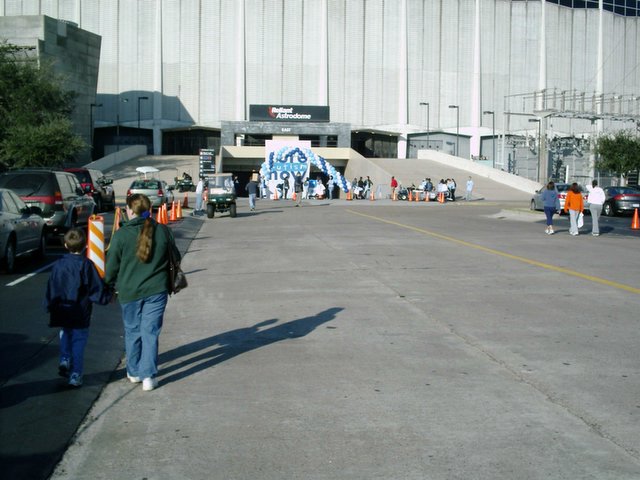
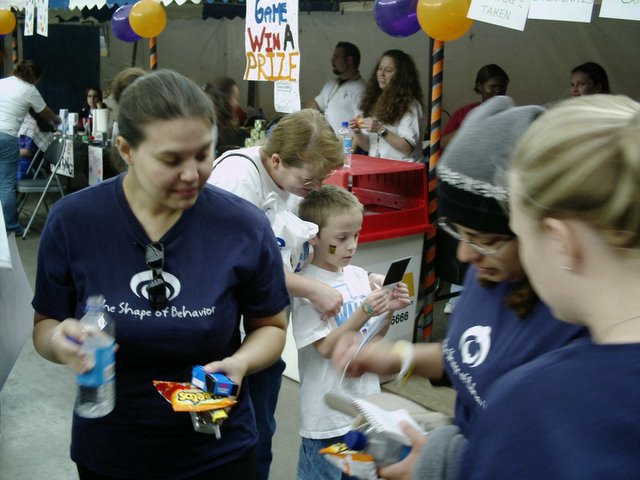
Over the weekend, over 1200 participants came together at the Reliant Park Astrodome to walk in the second annual WALK NOW event in Houston, TX! It was truly a special day for the autism community and Cure Autism Now in Houston raising over $145,000 to fund Cure Autism Now’s mission to find the causes, prevention, treatments and a cure for autism. Thank you for helping Cure Autism Now continue to take significant steps into solving some of the challenges surrounding autism.
As you head into the final quarter of 2005, keep fundraising for WALK NOW Houston to reach and surpass your fundraising goal! Donations are accepted until January 29, 2006 to help you reach your goal and collect each incentive along the way! Thank you for your hard work and raising over $145,000 for WALK NOW. Keep it up! Proceeds from WALK NOW support Cure Autism Now’s mission to find the causes, effective treatments, prevention and a cure for autism. The money you raise will enable us to fund biomedical research and innovative treatments.
Monday, October 31, 2005
Saturday, October 29, 2005
Cure Autism Now - Walk Now - This Saturday
You may be wondering why Cure Autism Now and WALK NOW are so important to me and my family. My involvement stems from a very personal and deep emotional contact with this complicated disease.
My 6-year-old son, Sean, was diagnosed with a form of Autism, Asperger's Syndrome, three years ago. I am very proud of Sean and impressed with his progress so far thanks to hard work on his part, our part and an excellent program within the Cy-Fair School District.
I strongly feel that I can have a direct impact on finding causes and cures for autism. I also feel strongly that Cure Autism Now is a wonderful organization which has been instrumental in furthering autism research. In 1995, when Cure Autism Now was founded there were only 12 researches focused solely on autism. Today there are over 300. That is progress. WALK NOW gives us a tangible way to help the nearly 1.5 million other Americans affected by autism and related disorders.
I am asking for your support in helping us raise money for this worthy cause.
Any contribution you are able to make would be greatly appreciated, but I ask you to give big as there is a big need for further research. My personal goal is to raise $150.00 for Cure Autism Now and I hope to far exceed that goal. Last year I raised $775.00!
It is easiest to donate online by going to our personal webpage at Sean's CAN page.
If you are unable to donate online, you can print out a donation form from that page and hand it to me. All checks should be made payable to Cure Autism Now.
Please feel free to forward this e-mail on.
I look forward to hearing from you. I thank you very much!
Always,
Marc
Thursday, October 27, 2005
Curious Goldie's Suburban Adventures
Too busy at this point to check it out, looks like she might have a child with Asperger's Syndrome.
Give it a visit!
Curious Goldie's Suburban Adventures
Aaron Tucker Mysteries
But, don't take my word for it:
"Would you enjoy a great murder mystery that delivers a ton of laughs and introduces you to colorful characters such as protagonist Aaron Tucker's immediate family, his organized crime family and some of the wackiest bad guys and cops you'll ever meet, that's delivered in a neat plot that twists and turns like a whirligig, and learn a lot about the often misunderstood world of Asperger's Syndrome? Jeffrey Cohen's As Dog Is My Witness has got it. Now, go get it!"--Dennis Debbaudt, author of Autism, Advocates and Law Enforcement Professionals
"As Dog Is My Witness" bit me with the first paragraph and never let go! I liked the story, the characters (and the author) so much I immediately ran out and bought the other two Aaron Tucker books. Now when do we get the fourth?"--Linda Ellerbee
"Funny? Of course - but also wise, suspenseful and a genuine pleasure to read."--Lee Child, New York Times bestselling author of the Jack Reacher series
If it sounds appealing to you, I urge you to find out more at www.aarontucker.com or email me at jeff@aarontucker.com and I'll be happy to answer any questions you might have. If you are impressed, I would ask that you let your friends know there's an entertaining, enlightening, funny book out there that might strike a familiar chord with them. And thanks for your interest.
Sincerely,
Jeff Cohen
Aaron Tucker Mysteries
Sunday, October 23, 2005
Monday, October 17, 2005
The Aspie Diaries
"The internet diary of a teenager with Asperger's Syndrome. Feel free to make comments, anyone can. I apologize in advance for anything insulting I may have put on my blog."
The Aspie Diaries
Saturday, October 08, 2005
Wednesday, September 28, 2005
littleGiantsteps
There is hope for your child. Whether your child has received a label of Brain Injured, Autistic, Down Syndrome, PDD, Asperger’s, Cerebral Palsy, William’s Syndrome, ACC, Obsessive Compulsive Disorder, Learning Disabled, Dyslexia ADD, ADHD or any other of the myriad of labels abounding, there is hope. Most diagnosis’ come with specific lists of what to expect and what the future holds. Don’t believe them. What the future holds is not something that can be predetermined or preset. What the future holds is based upon the opportunities that are presented to the individual.
Thursday, September 01, 2005
Asperger Toolbox
Asperger Toolbox
Tuesday, August 30, 2005
Thursday, August 11, 2005
Encyclopedia: Asperger's syndrome
Thursday, June 02, 2005
Ten Things Every Child with Autism Wishes You Knew
Some days it seems the only predictable thing about it is the unpredictability. The only consistent attribute -- the inconsistency There is little argument on any level but that autism is baffling, even to those who spend their lives around it. The child who lives with autism may look "normal" but his behavior can be perplexing and downright difficult.
Autism was once thought an "incurable" disorder, but that notion is crumbling in the face knowledge and understanding that is increasing as you read this. Every day, individuals with autism are showing us that they can overcome, compensate for and otherwise manage many of autism's most challenging aspects. Equipping those around our children with simple understanding of autism's most basic elements has a tremendous impact on their ability to journey towards productive, independent adulthood.
Autism is an extremely complex disorder but for this article we can distill it to what I call The Big Three: sensory processing challenges, speech/language delays and impairments, and whole child/social interaction issues. And though these three elements may be common to many children with ASD, we also must keep front-of-mind that no two (or ten or twenty) will be alike. For every child: a different spot on the spectrum. And, just as importantly - for every parent and teacher, a different spot on the spectrum.
Here are ten things every child with autism wishes you knew:
1. I am first and foremost a child -- a child with autism. I am not primarily "autistic." My autism is only one aspect of my total character. It does not define me as a person. Are you a person with thoughts, feelings and many talents, or are you just fat (overweight), myopic (wear glasses) or klutzy (uncoordinated, not good at sports)?
As an adult, you have some control over how you define yourself. If you want to single out a single characteristic, you can make that known. As a child, I am still unfolding. Neither you nor I yet know what I may be capable of. Defining me by one characteristic runs the danger of setting up an expectation that may be too low. And if I get a sense that you don't think I "can do it," my natural response will be: Why try?
Sensory integration may be the most difficult aspect of autism to understand, but it is arguably the most critical.
2. My sensory perceptions are disordered. This means that the ordinary sights, sounds, smells, tastes and touches of everyday that you may not even notice can be downright painful for me. The very environment in which I have to live often seems hostile. I may appear withdrawn or belligerent to you but I am really just trying to defend myself. Here is why a "simple" trip to the grocery store may be hell for me:
My hearing may be hyper-acute. Dozens of people are talking at once. The loud speaker booms today's special. Musak whines from the sound system. Cash registers beep and cough, a coffee grinder is chugging. The meat cutter screeches, babies wail, carts creak, the fluorescent lighting hums. My brain can't filter all the input and I'm in overload!
My sense of smell may be highly sensitive. The fish at the meat counter isn' t quite fresh, the guy standing next to us hasn't showered today, the deli is handing out sausage samples, the baby in line ahead of us has a poopy diaper, they're mopping up pickles on aisle 3 with ammonia..I can't sort it all out; I'm too nauseous.
Because I am visually oriented (see more on this below), this may be my first sense to become overstimulated. The fluorescent light is too bright; it makes the room pulsate and hurts my eyes. Sometimes the pulsating light bounces off everything and distorts what I am seeing -- the space seems to be constantly changing. There's glare from windows, too many items for me to be able to focus (I may compensate with "tunnel vision"), moving fans on the ceiling, so many bodies in constant motion. All this affects my vestibular sense, and now I can't even tell where my body is in space.
Receptive and expressive language and vocabulary can be major challenges:
3. Please remember to distinguish between won't (I choose not to) and can't (I am not able to).
It isn't that I don't listen to instructions. It's that I can't understand you. When you call to me from across the room, this is what I hear: "*&^%$#@, Billy. #$%^*&^%$&*...Error! Hyperlink reference not valid." Instead, come speak directly to me in plain words: "Please put your book in your desk, Billy. It's time to go to lunch." This tells me what you want me to do and what is going to happen next. Now it is much easier for me to comply.
4. I am a concrete thinker. This means I interpret language very literally. It's very confusing for me when you say, "Hold your horses, cowboy!" when what you really mean is "Please stop running." Don't tell me something is a "piece of cake" when there is no dessert in sight and what you really mean is "this will be easy for you to do." When you say "It's pouring cats and dogs," I see pets coming out of a pitcher. Please just tell me "It's raining very hard."
Idioms, puns, nuances, double entendres and sarcasm are lost on me.
5. Please be patient with my limited vocabulary. It's hard for me to tell you what I need when I don't know the words to describe my feelings. I may be hungry, frustrated, frightened or confused but right now those words are beyond my ability to express. Be alert for body language, withdrawal, agitation or other signs that something is wrong.
Or, there's a flip side to this: I may sound like a "little professor" or movie star, rattling off words or whole scripts well beyond my developmental age. These are messages I have memorized from the world around me to compensate for my language deficits because I know I am expected to respond when spoken to. They may come from books, TV, the speech of other people. It is called "echolalia." I don't necessarily understand the context or the terminology I'm using. I just know that it gets me off the hook for coming u p with a reply.
6. Because language is so difficult for me, I am very visually oriented. Please show me how to do something rather than just telling me. And please be prepared to show me many times. Lots of consistent repetition helps me learn.
A visual schedule is extremely helpful as I move through my day. Like your day-timer, it relieves me of the stress of having to remember what comes next, makes for smooth transition between activities, helps me manage my time and meet your expectations. Here's a great website for learning more about visual schedules: www.cesa7.k12.wi.us/sped/autism/structure/str11.htm.
Don't let autism cause you to lose sight of the whole child. Self-esteem is crucial.
7. Please focus and build on what I can do rather than what I can't do. Like any other human, I can't learn in an environment where I'm constantly made to feel that I'm not good enough and that I need "fixing." Trying anything new when I am almost sure to be met with criticism, however "constructive," becomes something to be avoided. Look for my strengths and you will find them. There is more than one "right" way to do most things.
8. Please help me with social interactions. It may look like I don't want to play with the other kids on the playground, but sometimes it's just that I simply do not know how to start a conversation or enter a play situation. If you can encourage other children to invite me to join them at kickball or shooting baskets, it may be that I'm delighted to be included.
9. Try to identify what triggers my meltdowns. Meltdowns, blow-ups, tantrums or whatever you want to call them are even more horrid for me than they are for you. They occur because one or more of my senses has gone into overload. If you can figure out why my meltdowns occur, they can be prevented. Keep a log noting times, settings, people, activities. A pattern may emerge.
10. If you are a family member, please love me unconditionally. Banish thoughts like, "If he would just.." and "Why can't she..." You did not fulfill every last expectation your parents had for you and you wouldn't like being constantly reminded of it. I did not choose to have autism. But remember that it is happening to me, not you. Without your support, my chances of successful, self-reliant adulthood are slim. With your support and guidance, the possibilities are broader than you might think. I promise you - I am worth it.
And finally, three words: Patience. Patience. Patience. Work to view my autism as a different ability rather than a disability. Look past what you may see as limitations and see the gifts autism has given me. It may be true that I'm not good at eye contact or conversation, but have you noticed that I don't lie, cheat at games, tattle on my classmates or pass judgment on other people? Also true that I probably won't be the next Michael Jordan. But with my attention to fine detail and capacity for extraordinary focus, I might be the next Einstein. Or Mozart. Or Van Gogh.
They had autism too.
The answer to Alzheimer's, the enigma of extraterrestrial life -- what future achievements from today's children with autism, children like me, lie ahead?
All that I might become won't happen without you as my foundation. Think through some of those societal 'rules' and if they don't make sense for me, let them go. Be my advocate, be my friend, and we'll see just how far I can go.
If you enjoyed this article you'll love the new book "What Every Child With Autism Wishes You Knew." Look for it this Fall!


